
From the impacts on social media, technology has become almost impossible for teenagers to live without. This heavy reliance is changing how teens think, communicate, and experience the world.
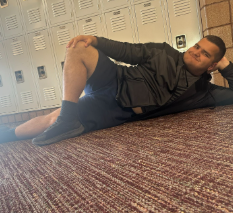
For many students, social media can act as a temporary escape from stress or negative emotions. Alex Garcia, a high school sophomore at Horizon, explains that scrolling through social media sometimes helps him take his mind off difficult situations. Garcia says, “Sometimes I use social media as a way to take my mind off things when I’m stressed or upset. Scrolling through videos or posts helps distract me for a little while so I don’t have to think about school pressure or family problems right away.”
While social media can provide a quick distraction, Garcia also acknowledges that his phone plays a role in many parts of his daily routine. “I use my phone every day for schoolwork, like checking assignments and emails, and also to stay in touch with my friends. I listen to music, I set alarms, and check my socials whenever I have free time.” Although he does not feel extreme anxiety without social media, he still notices the habit of constantly reaching for his phone. “I don’t panic, but I definitely feel bored and kind of disconnected. It feels strange not knowing what my friends are doing, and I notice that I reach for my phone out of habit even when I don’t really need it.” His experience reflects how easily phone use can become part of a teen’s daily routine.
Other students view social media primarily as a way to stay connected with friends and classmates. Brianna Medina, a senior at Pinnacle High School, explains that she uses social media mostly to communicate with others rather than escape from problems. She says, “I don’t really use social media to escape my problems, but I do use it to talk to my friends when something is bothering me. So I guess, it makes me feel better knowing I can message someone right away instead of keeping everything to myself.” For Medina, her phone serves as a constant link to her social and school life. She explains, “My phone is super important for staying connected. I use it for group chats, social media apps like Instagram and Snapchat, checking my schedule, and keeping up with school announcements because I’m in cheer.” However, being so connected can also create a sense of pressure to always stay updated. She admits that she sometimes feels uneasy if she cannot check social media. “Yes, I feel restless because I worry that I’m missing out on conversations or events. It makes me feel out of the loop, like everyone else is having fun and I don’t know about it. I think it’s called FOMO.” Her perspective highlights how social media can create a fear of missing out among teenagers.
Some students have a more relaxed attitude toward social media but still recognize how often they use it. Marcus Kent, a senior at Pinnacle High School, describes his phone as something he turns to mostly for entertainment. Kent says, “Sometimes I do, but mostly I use social media when I’m bored or have nothing else to do. Watching videos or playing games helps me relax and forget about stress for a bit.” Like many teenagers, he uses his phone for a variety of tasks throughout the day. “I use my phone for entertainment like YouTube, music, and games, but also for school stuff like checking homework and messages from teachers. It’s kind of an all-in-one thing I depend on every day.” Even though Kent does not feel extremely anxious without social media, he still notices the habit of wanting to check it. “I wouldn’t say troubled, but I get bored because I don’t know what to do with my time. I notice I keep thinking about my phone even when I don’t have it.” His experience suggests that even casual users can develop routines centered around their phones.
For some students, social media plays a deeper emotional role. Lily Tompkin, a senior at Horizon High School, explains that she often turns to social media when she feels overwhelmed or lonely. She says, “Yes, I use social media a lot when I feel lonely or overwhelmed. It helps distract me from negative thoughts and makes me feel like I’m connected to other people instead of being by myself.” Her phone is also important for managing daily responsibilities and staying organized. “I use my phone to message friends, check school emails, organize my schedule.” Tompkins also admits that not having access to social media can make her feel uncomfortable, “Yes, I feel really anxious and uneasy when I can’t check my phone. I worry that I might miss something important or that people are trying to reach me and I don’t know about it.” Her experience shows how social media can become a source of reassurance for some teens.
Across these different experiences, students demonstrate that social media plays an important role in their daily routines. It allows them to stay connected with friends, relax during stressful moments, and manage school responsibilities. At the same time, many students admit they feel bored, restless, or anxious when they cannot access their phones. These perspectives suggest that while social media offers many benefits, teenagers may also be developing a growing reliance on it for communication, entertainment, and emotional support in their everyday lives.