
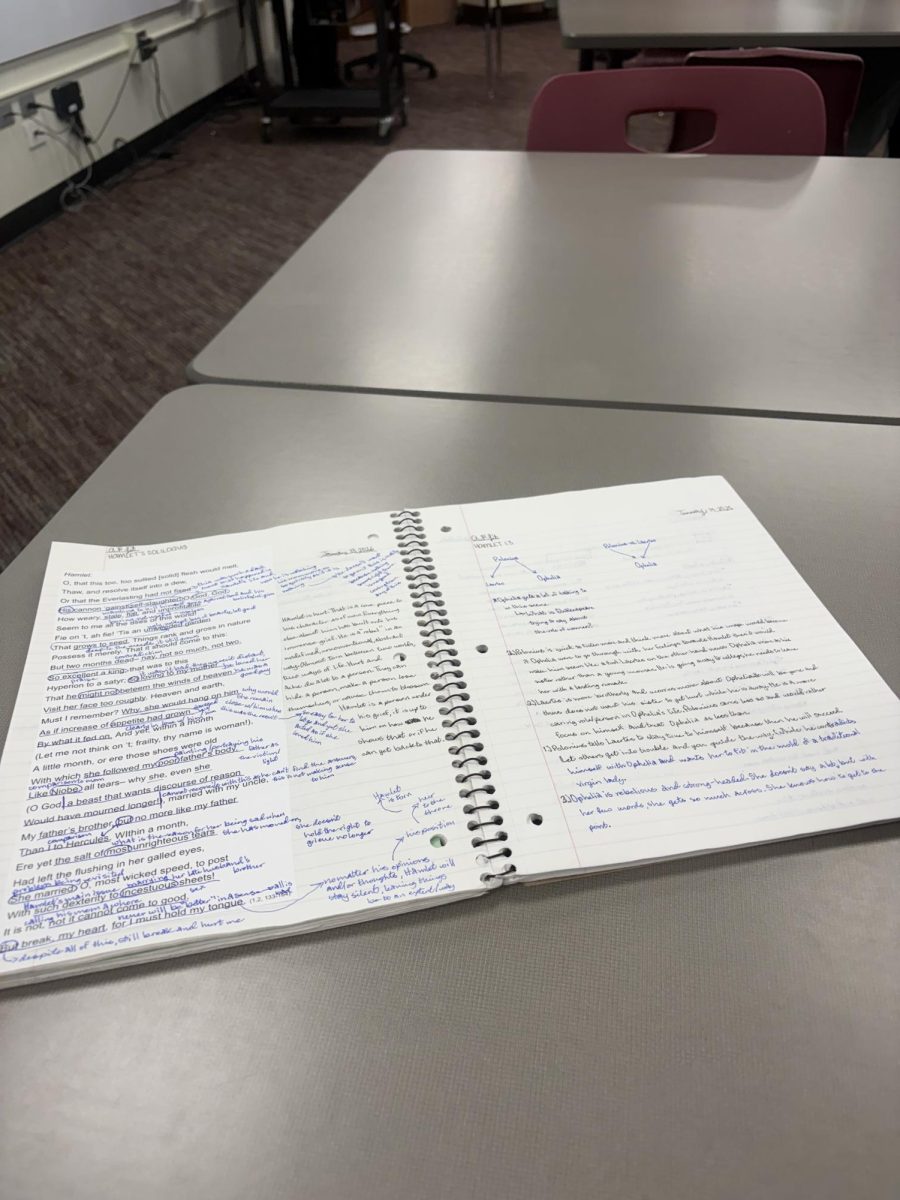
Not everything is meant to be spoken. Some feelings arrive without warning and stay without words, lingering until they find their way onto a page. For many students, writing is not just an assignment, but a release, a way to understand themselves and the world around them. In writing, teenagers are discovering that the things they cannot say out loud do not have to remain unheard.
For some students, writing is more than a habit, it is a lifeline. Some have experienced the power of writing firsthand, using it as a way to process emotion, reflect on growth, and make sense of moments that felt too complex to say aloud.
Former Horizon student, now a senior at Grand Junction High School, Olivia Dunn mostly writes for school, but in her free time, she also writes stories and scripts. While she doesn’t typically use writing to manage stress, Dunn explains that writing is easier than talking because you can change and edit your words. She believes that writing can help teenagers better understand themselves by giving them a simple way to sort through their feelings. When asked whether writing has a positive or negative impact on a teen’s mental health, Dunn says, “Positive because it allows kids to process and talk through their emotions and thoughts.” However, she feels conflicted about school assignments, stating “If a student is allowed to pick a topic they are passionate about, the writing has more personal expression than if a topic was forced on them.” She also notes that some students may feel nervous about sharing personal writing, which can cause them to hold back.
For others, writing is not just a way to think, but a way to survive, to put words to feelings that can be too heavy to carry alone. For Horizon 2025 graduate Terah Malecki, journaling serves as a way to organize her thoughts and release what she finds herself holding onto. While Malecki believes both writing and talking serve important purposes, she sees them both as tools to be used differently, saying, “Writing helps me let go when something’s going on while talking to people gives me advice on how to process things.” When asked whether writing can help teenagers better understand themselves, she doesn’t hesitate. She says, “Absolutely! Writing has helped my mental state grow into something more manageable when it feels like my life is falling apart.” Malecki believes school writing should focus on analysis but could also include more opportunities for self-reflection.
While students can often discover the power of writing on their own, there are teachers behind the scenes helping them learn how to turn feeling into language. Horizon English 10 and AP Literature teacher Jennifer Kavaney has been teaching English for 25 years. When asked why she chose to teach English, she says, “The simple answer is I wanted to share my passion with young people.” When it comes to how writing helps students process their emotions, Kavaney explains, “The physical act of moving a writing utensil across a page connects the head with the heart.” She also notes that, “Seeing their emotions on paper is concrete. The power of writing cannot be underestimated.” More than anything, Kavaney hopes students view writing assignments as more than just a grade, believing they should walk away with a deeper understanding of themselves.
While high school English teachers often help students refine their voices, that relationship with writing is built years earlier. Ashlie Teague has been teaching for 13 years and currently teaches eighth grade English at Rocky Top Middle School. Teague explains that she chose to teach English because of her senior year English class. She says, “I was the only student who seemed to ‘Speak Shakespeare.’ Somehow it just made sense… I started to tutor students on Shakespeare and realized that I was actually good at teaching it.” Teague says she is often surprised by what students reveal in personal memoirs. “I was pleasantly surprised at the amount of students who opened up and shared some very personal things about their life,” she explains. She believes sharing these stories helps students realize they are not alone. Beyond grades, Teague hopes students recognize the lasting value of writing and leave her classroom curious and confident.
Writing is more than an assignment or a skill taught in a classroom. It is a way for students to make sense of the world and themselves. Whether through journaling, poetry, or structured essays, writing offers teenagers a space to feel seen and understood. In a time when emotions often go unspoken, writing remains one of the most powerful ways to say what cannot always be said out loud.