

High school has its own unspoken map. You won’t find it printed in a handbook, but most students learn rather quickly who spends time with who and who tends to cluster together. Athletes gravitate toward athletes, theater kids find each other, the AP students with other AP students, and so forth. Eventually, patterns form before anyone even names them.
Some students find it easy to find a group of friends. Others adjust themselves to fit in. While some hover somewhere in between, unsure if belonging means blending in or standing out.
Pop culture has long exaggerated high school cliques into rigid, color-coded categories. But today, the lines are less obvious and thus more complicated. Groups still exist, but they shift, overlap, and evolve. The question is no longer just if cliques are real, but how students feel free inside of them.
The class of 2026 has spent the last four years navigating the social landscape of high school. They watch cliques form, shift, and sometimes fade entirely.
Across Colorado high schools, seniors say those groups still exist. Although, they often look different from the stereotypes seen in movies.
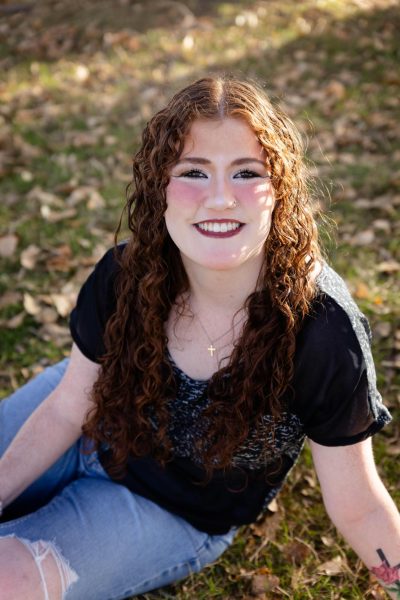
At Horizon, Faith Jaminet believes cliques often grow from shared activities. “I think I personally fit into the group of ‘band kids,’ mainly just because I love music and am a part of a ton of musical activities,” she says. While groups can create strong connections, Jaminet notes that being between multiple circles can feel uncertain, “It can be difficult to be in between friend groups as you don’t really feel like you fully belong in one specifically.”
At STEM School Highlands Ranch, Kingston Xiong says cliques still shape the social environment, but he doesn’t necessarily see them as negative. He explains, “There’s a bunch of others too, socially and academically minded. Like the ‘popular kids’ who succeed in sports, the engineering geeks, etc. Everyone finds where they fit in.” He also adds that the ‘popular group’ solidified themselves by being in charge of the school’s social media and getting involved. Xiong feels connected to multiple circles, including the Asian American and LGBTQ communities at his school. Although, he admits balancing several groups can feel complicated, stating, “I feel like the floater friend who belongs to all yet also belongs to none.”
At Grand Junction High School, Olivia Dunn says students often gravitate toward people who share similar personalities or interests. However, she doesn’t feel tied to one specific clique and prefers moving between different groups of friends. “You get to meet people and experience things you might not normally get to do, hanging out with those different from you,” she explains. “It helps open your eyes to all sorts of possibilities, and oftentimes allows you to be more accepting and so on.”
At Legacy High School, Tatyana Radzichovsky believes cliques are less fixed than they appear in movies. Instead of strict labels, she sees them as friendships built around shared interests. She says, “They’re groups of people that become friends around common interests.” Radzichovsky also doesn’t place herself in just one circle. She believes that her interests connect her with several groups. However, she admits pressure can still appear when trends spread through friend groups. “When everyone, especially your friends, are doing something it’s easy to feel pressured to act the same to not stand out.”
From a counseling perspective, Michael Muedeking says cliques often develop as students search for belonging and identity. He explains, “I think the most common reason is to have the feeling of belonging to a group, and also to help form their identity.” Muedeking notes that when students feel they do not fit into a group, it can take a toll on their confidence and overall well-being. He believes students benefit from connecting with several different groups, saying, “I think it is healthier for a student to have multiple groups that they are comfortable with… The more support students have the better.”
As graduation approaches, many seniors leave high school with a clearer understanding of where they fit. They realize that fitting neatly into one place was never necessary to begin with. For some, cliques provided friendship and familiarity. For others, moving between groups created opportunities to meet new people and explore different interests.
While the labels surrounding high school social circles may still exist, they no longer define students as strictly as they once did. In the end, the answer to, “where do you belong?” may not be a single group at all. For many students, it is simply wherever they feel accepted, supported, and free to be themselves.