
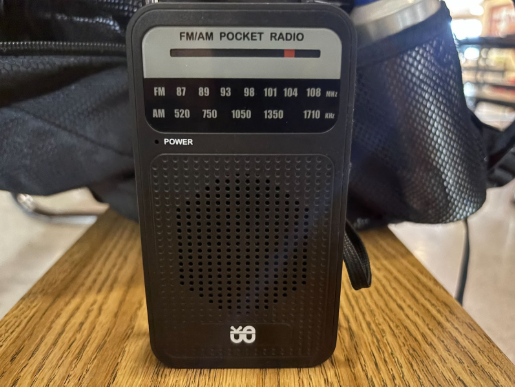
Radios have been a part of revolutionary technology for so long, that seamless connection to radio stations in our cars, phones, computers, and much more all came from extensive technology that we have long forgotten, known as a radio. Radios have been in recent decline in the present years due to being outperformed by newer technology that outclasses them.
Radios were made in 1894, by a man named Heinrich Hertz who revolutionized the world since then. His revolutionary radios further developed technology we see in the present day. However, with this new technology further overshadowing old technology like radios, it will not be too soon to see the decline of radios in the future.
A Short History of Radio With An Inside Focus On Mobile Radio, it mentions that the term “wireless” actually refers to a telegram, a machine that receives or sends electrical inputs. But the term’s modern day definition is to describe picture taking or texting. However, in a more recent article, What Does Wireless Mean in 2020?, it cited that “ ‘wireless’ is a loaded term in 2020. It can refer to many different types of radio communication services”. This is important because not only are older technology being outshined in performance, but also in new modern definitions of technology. As described above, it can be used to describe a seamless communication and connection of newer technologies.
Due to this decline in radio technology and improvements in newer technologies like phones. Not many people listen to the radio anymore. This is proven by the overwhelming number of students in Horizon that don’t listen to radio anymore. From a senior student, Dara Lennon, “I don’t listen to the radio unless my dad is playing it. He primarily listens to classical (88.1) and sometimes classical rock (103.5).”
Along with another senior student, Zakai Garcia who had to state that “I used to listen to radio when I was young, and I think I used to listen to 107.1 (FM). I would listen to that whenever my mom would be taking me to school”. Both Zakai and Dara mention that they both listen to radio when around their parents, possibly correlating that older generations listen to radio more frequently than younger generations.
From what these students say, a conclusion can be made that radio is more popular for older people, mainly adults. The reason why the popularity with older people was because radio was quite common to listen to back then, if not one of the only things you could listen to in the very late 20th century. So the natural decline for radios for a newer generation is quite expected as newer generations will not experience the same thing as a radio. This is proven by another senior student, Damien Clark, “I don’t listen to radio often. I think the only one I really listen to is 99.33 (FM), ‘The Bull’ I think it is? And that’s when I’m with my grandparents”.
Referenced in the article, The Rise and (Overstated) Fall of Radio, radios still suffer from being surpassed despite their practicality. Newer platforms on social media like Spotify, iTunes, and Youtube, have started to gain popularity over recent years. This challenges radio music as it slowly loses popularity and favors these music platforms making radio stations obsolete when music could be played from these stations whenever and wherever they want.
However this does not mean radio is not functional, indeed that is the opposite. Radio, despite their original military usage for the Navy, can be used as ways to convey art and self expression. Seen in the article, Radio Still Matters, Here’s Why, it mentioned that it can “…tell stories, convey ideas, music, knowledge, and be whatever you want it to be”. So more than just practical listening, it can be a way to express oneself as well. To add on to this, radio may not be all dead and forgotten, as seen with one interviewee, Donovan Banuelos, stating “I listen to stereo, some stations I listen to are 93.3 (FM), 101.7 (FM), and 107.9 (FM)”.
To summarize, while radio may not be as popular as it once was, they are still a useful tool in the modern day. Radio faces new challenges with competing with online music platforms and the declining use for radios, and the increasing improvements on phone technology. Radio is still as fruitful today as it once was, as radio still provides music and entertainment for older generations, like parents or grandparents. And radio can be a way of self-expression, to express oneself through radio by telling stories, sharing music, and so much more. To conclude, radios are still vital today, not for being the new advancement in communication back in the late 19th century, but for its notable ability to still have an impact in the world when still being outclassed by newer forms of communication.