

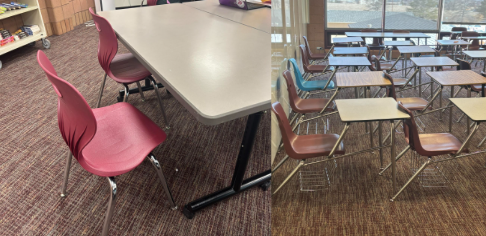
Along with the classroom or the friends that people make within it, one of the most common aspects that people associate with school is sitting down at a desk with a pencil to do the work one’s given. There’s a very large inconsistency in classes when it comes to Horizon, since classrooms vary from having chairs which are free to be moved around, while others have more stiff desks which have a metal bar attached to the chair to prevent it from moving. Additionally, the arrangement of the seats along with the various positions that students find themselves having in the classroom could be lopsided, since kids learn better in certain places. Does the difference change the way students learn in school, and should student seating be looked into?
In the conversation about where students sit in the classroom, the main focus is often relating to the front board. Jackson Bankuh, a freshman at Horizon said, “I feel like if I’m closer to the teacher then I’m able to lock in more then if I’m farther then I get off track.” If something even as small as the place where students sit can affect their grades, then rooms should be set up in a way that allows for all kids to be able to focus on the board at the same time. This way different students who require different seats to learn properly such as the disabled can better focus on the subjects presented in class.
Another factor which influences the experience is the quality of the chairs, since students usually have to sit on plastic seats while they envy their teachers who get to rest on plushier rollable chairs that look a lot more comfortable to be on. Westin White, another freshman at Horizon commented, “I know I’m not big, but I’m tall and one thing I hate is that because they’re connected I couldn’t move my chair back or out so I can spread my legs.” While a large majority of students may be slim and able to properly fit in the seats, it’s also important to understand that different kids with different body types may have a better or worse experience with the chairs based on a factor they cannot control.
While it may seem that students have grown accustomed to the chairs and tables at school, kids still have dreams about the kinds of furniture they wish to be able to sit on rather than what they normally do at school. Hanna Pen, a Sophomore at Horizon said, “I think I’d like little desks like what they have in the library with taller chairs or stand alone tables that could fit two to four people at most.” While it may not be the standard, listening to students on their seating preferences could go a long way to building an environment around them so they feel more inclined to absorb information taught to them due to the school feeling like a safe space. According to an article posted by the Oxford Royale Academy, eliminating distractions along with getting involved in classroom discussions is the best way to stay focused, which can each be done as long as the arrangements of the desks allow for the behavior to happen.
Reed Welch, a 9th grader at Horizon left the comment, “I’d say a desk with one of those rolly chairs would be nice, keep the tables the same but, just make sure the chairs are nice and padded.” Even just going the length of adding padding to the chairs really would improve the educational environment by making kids more comfortable and focused.
The differentiation between the seats can easily change a student’s outlook on the education at the school if they find it to be too uncomfortable to even sit in a classroom to begin with. Soon they may begin to complain and lose focus by talking with their friends, which may affect the quality of others’ experience in the classroom, so it’s better off to solve the issues by granting students tables and chairs they’d want to sit on. Most importantly, ensuring that the positions of each of the seats of the classroom are as optimal as possible will go a long way to granting students the key they need to continue learning.