Once upon a time, castles rose from the clouds, wishes were whispered to stars, and magic lived in the space between a dream and a happily ever after. For many girls, Disney princesses were the first mirrors we ever looked into, teaching us how to love, to hope, and to dream. From glass slippers to enchanted kingdoms, these worlds shaped childhoods with songs and stories that promised courage, kindness, and the belief that anything was possible. But as those girls grow older, the question remains: what parts of those fairy tales stay with us, and how do they shape the way we see ourselves?
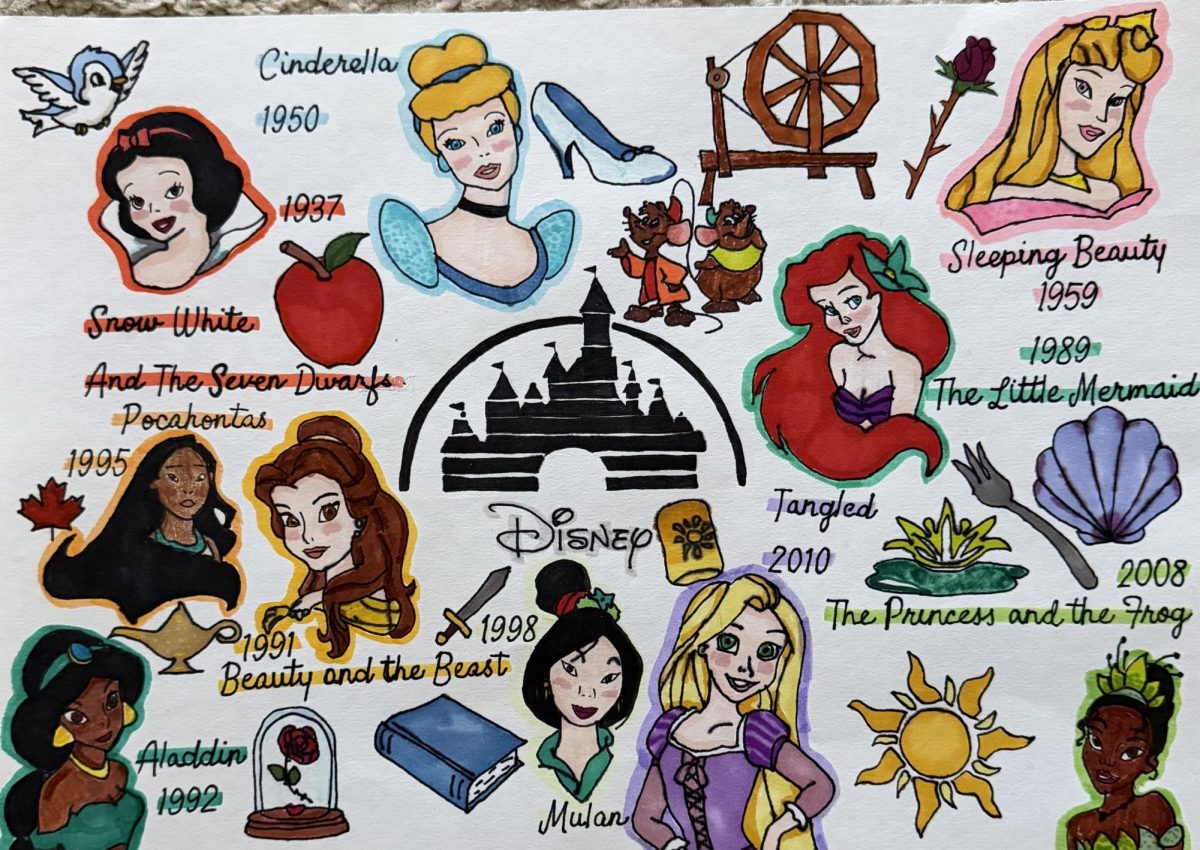
When the first Disney princesses appeared on screen in the 20th century, their stories were simple and roles narrow. Snow White, Cinderella, and Aurora existed in worlds where kindness was rewarded with rescue, and happily ever after almost always arrived in the form of a prince. As decades passed, however, the princess narrative began to shift. The late 20th century introduced Ariel, Belle, Jasmine, Pocahontas, and Mulan. They were girls who questioned rules, chased curiosity, and fought for something beyond romance. By the 2000s, modern heroines like Tiana, Rapunzel, Merida, and Moana stepped into the spotlight. These newer stories celebrated ambition, identity, and independence, reflecting a generation of girls who wanted more than fairy tales.
Like many childhood stories that begin with a dream, Horizon senior Maya Stockey grew up captivated by Princess Tiana, drawn to her ambition and elegance. For Stockey, however, the magic of these films is not without flaws. When asked what she would change, she says, “Not every princess needs to have a prince. A lot of the stories incorporate these kinds of relationships.” Still, she believes the heart of these stories holds something powerful, and that is what young girls should carry with them. She says, “The empowerment of women and their ability to change their lives and others through kindness and perseverance.”
For Allie Newberry, a senior at Horizon, Disney princesses were not just characters on a screen, but reflections of who she saw herself becoming. Growing up, she gravitated toward Cinderella and Rapunzel. She adds, “I also loved their respective movies… I kind of saw a role model in them.” Newberry believes these films have long shaped how girls understand beauty and independence. She says, “They have been greatly influencing how women empowerment is viewed by young girls… they do show girls that it’s not just a partner or status that makes you a complete person.” She also points to how the narrative has evolved, explaining, “The 1980s and 1990s rolled in with more independent and complex female characters who didn’t really need a love interest, it was more of a way to drive the plot along.” Newberry notes that newer films like Brave and Moana finally allow heroines to exist without romance at all.
For Lia Vitapa, a senior at Horizon, connection to Disney magic began with something simple and personal: her hair. She always related to Rapunzel, joking, “I have three and a half feet of hair compared to her hundreds of feet of hair.” But behind the humor lies a deeper reflection on how these stories shape expectations: “Princesses are always made to look perfect and skinny, and that really affects girls.” If she could rewrite the fairytale, she would change its perfection. “I would make them have imperfections, a real princess and not a magical, perfect maiden,” she explains, hoping girls learn that difference and imperfection can be just as powerful as magic.
While some girls fell in love with fairy tales, Horizon senior Rahjae Marshall found inspiration in something deeper than romance: resilience. For her, Princess Tiana represented perseverance. She says, “Tiana gives and shows the story of wanting love in her life, but she’s also a very hard working individual.” Marshall believes Disney films capture the emotional journeys girls experience growing up: “Girls go through different things in life… and these movies show that different perspective.” To her, the stories are universal. She explains, “They all tell the story of things girls go through in life like love, loss, death, and relationship loss.” Ultimately, Marshall hopes young girls leave these films with something lasting: “It’s okay to go through loss and different things in life because it shapes us into who we are and to always be who we are on the inside.”
In the end, Disney princesses are more than crowns and castles, they’re mirrors, maps, and sparks. Their stories reveal how girls see themselves, love, beauty, and possibility. As these tales evolve, so does the magic: not perfection, but courage, complexity, and the freedom to write your own ending.