
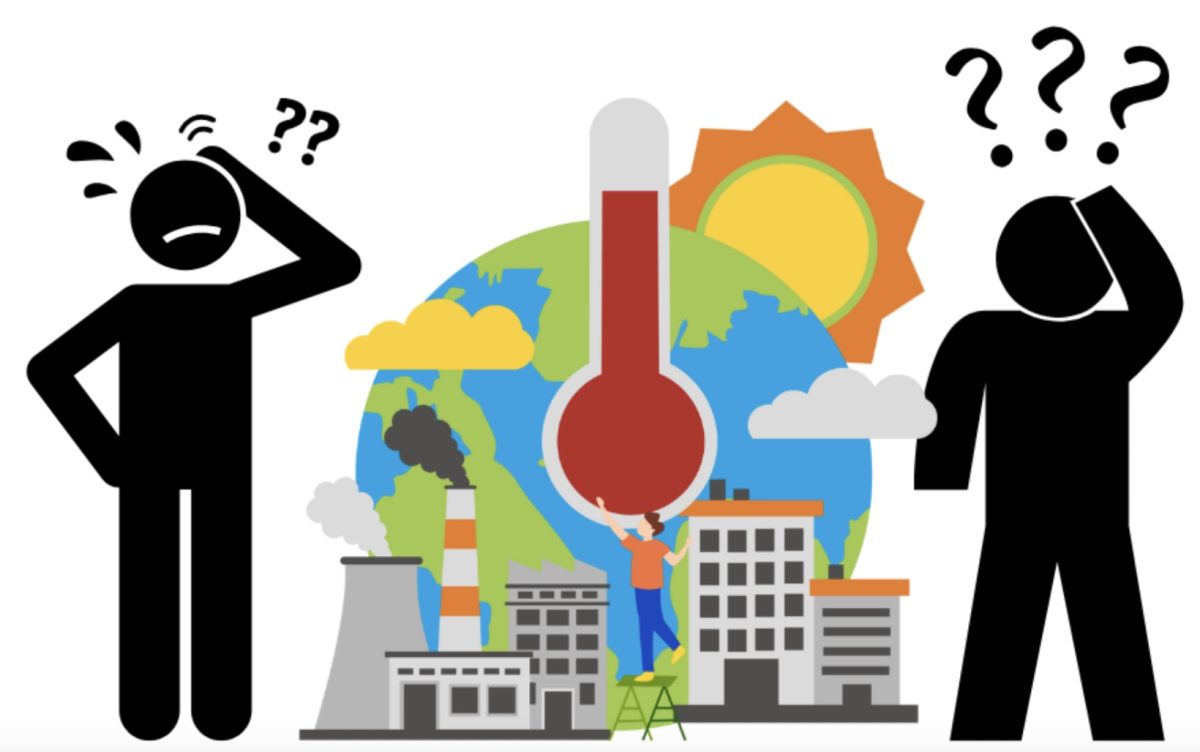
Gen Z is the generation with the greatest climate anxiety yet. According to a study by the Pew Research Center, about 69% of teens experience some kind of anxiety about the climate. However, how much do Gen Z teens really know about climate change?
The data shows a strong split in teens’ climate literacy. About 50 to 54% of teens can correctly identify the main cause of climate change According to two studies by UNICEF and This Is Planet Ed which is fossil fuel emissions. Other answers, ranging from the natural tilt of the sun, cloud seeding, the hole in the ozone layer, and not knowing, make up the other 46 to 50%.
Some of these misconceptions are so prevalent that they have our own teachers talking. Jennifer Guerriero, an earth science and past environmental science teacher at Horizon, says, “I think there’s a misunderstanding between climate change and a hole in the ozone layer, even though they are two separate issues.”
This may look like half of teens are knowledgeable about climate change and the other half are not, but it’s a lot more gray than that. Teens’ answers to the question posed by Plant ED that said things like, The tilt of the sun, Earth’s natural cycles, and the hole in the ozone layer are all factual answers. All of those problems and processes do contribute to changes in climate, but are not the main reason for climate change. Teens often mix up climate and weather. AP environmental science and biology teacher Andrew Bandos said, “I think the one [misconception] I see [is] the difference between climate and weather.”
This can show a half-baked knowledge of climate change or not understanding the difference between earth sciences and environmental sciences, which are similar but very different topics. Earth sciences is the unaffected science behind how the earth works, like how wind patterns and how rocks form, while environmental sciences are about human effects on the earth and environmental issues, like for example: climate change.
We can even see these discrepancies in students’ knowledge at Horizon High School. Xander Kubec, a junior at Horizon, when asked to rate his own knowledge on climate change said, “like a five out of ten, it affects the weather [and] makes stuff warmer.” When asked, he couldn’t give an example of an environmental issue that stems from this.
While another student, Santana Martinez, a Senior at Horizon, said, “I guess a seven out of 10, I see a lot of it in news articles and on Instagram,” and when asked about an environmental issue, could identify and explain ocean acidification as an effect of climate change.
But why is the understanding of climate change so mixed? when asked about if there was a spike or decrease in students’ knowledge of climate change bandos said, “it depends on who they are and what background knowledge they have coming into it”
Knowledge on climate change, or the lack of it, is so varied because of many factors. The type of schooling you get is one of them. Some schools don’t go very in depth about climate change, and the reasons for it, and some religious schools don’t talk about it at all, while other schools talk much more in depth about it, which means depending on what schooling or even religious background they come from, it impacts high schoolers’ knowledge of climate change.
Another reason can be just a general interest in the topic. While the idea of climate change is very broad so to have an accurate understanding of it you have to learn about a lot of topics like, water, air and land pollution, fossil fuels and agriculture which also splits down into smaller and smaller sections until you get into these very niche areas, which a lot of teenagers don’t have the time to research. Why would a teen do all of this Googling and reading in their free time while already loaded with school work? Especially if they are not interested in it.
There isn’t one true answer to how much teenagers know about climate change, since we all have such different and diverse experiences with education, and our planet it is borderline impossible to quantify so many different experiences into one number. Hopefully, the teens of the future will have a more unified understanding of our climate.