
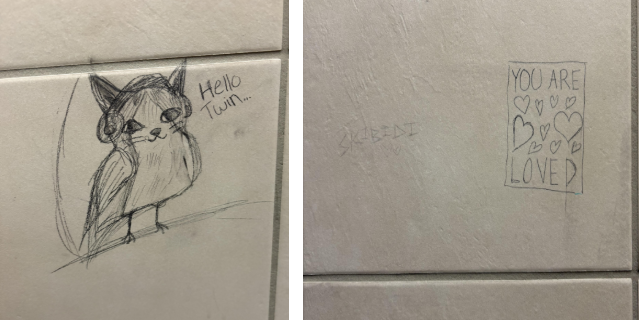
There is a time and place where one may be a witness to an action which they may not grasp the thought process that went into it. An example of it being common on the inside of restroom doors you might notice there is a strange message or symbol that was written, or a broken urinal that had its body destroyed by a vandal who was there before. Vandalism can be found pretty much anywhere in both public areas and schools. But could there be any meaning for them to be there in the first place?
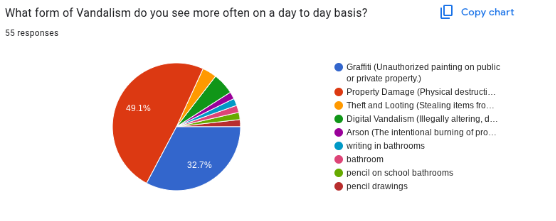
Vandalism can come in many different variants from the graffiti that one might see on a street post to the property damage like someone throwing a baseball into a window. According to a vandalism survey done on a group of 55 Horizon students, over 49.1% of the most common vandalism they see is property damage, with graffiti coming in second at 32.7%. Michael Muedeking, a counselor at Horizon expressed, “It usually just makes me feel disappointed because sometimes it could be like a brand new store goes up and before it’s even opened people are tagging walls and stuff like that.”
With so many different types of vandalism being done everyday, a question arises of why do vandals feel the need to perform their actions. Ryah Swan, a senior at Horizon said, “It’s feelings of resentment harbored against the people in charge or whoever owns the property, feelings of lack of expression, and boredom.” More reasons stated by other students in the vandalism survey include peer pressure, artistic purposes, social media, and generally having a lack of respect for the environment. Not all vandalism is created to be harmful however, since some are made to spread positive messages.
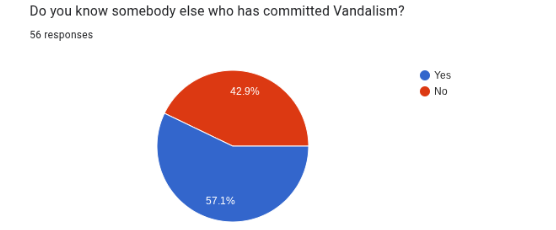
There are many different stories of vandalism one might have, but most don’t get a full viewing of the picture created on it unless it’s a person who deals with it on a frequent basis. Jose Mieles, a Security Officer at Horizon says, “I will say for school settings, we get a lot of the graffiti on the walls, a lot of the toiletry dispensers are being broken, and the soap dispensers are damaged mostly so far.”
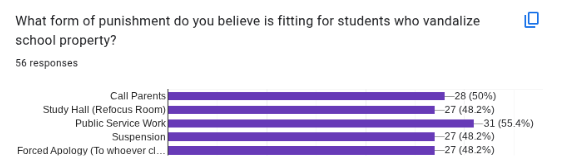
These insights may bring people to have more questions, such as how many vandals are caught on average, and what happens to them once they’ve been apprehended? On average, most students seem to think that vandals should at least receive public service work as punishment from the vandalism survey. Cassidy Gussman, a Dean at Horizon explained, “If it’s property damage then that can result in a suspension, and if it’s lower stuff it could be what we call work detail where they would be assigned to come clean with our custodial staff after school.”
Vandalism’s hidden truth is that there is no one exact reason why it happens. Sure, some cases are as simple as students finding it fun to go into a bathroom and break items. However, only looking at those examples completely disregards the cases where a student may just be getting forced into doing it out of peer pressure, doing it for artistic purposes, or because they were bored. Muedeking adds that, “Even then, Horizon is thankfully a place where vandalism isn’t much of a problem, so students don’t need to worry about going to a bathroom to find it graffitied and wrecked by other kids.” Either way, it’s a good idea to report any vandalism that one might see so that it can be cleared up by Horizon Staff.