
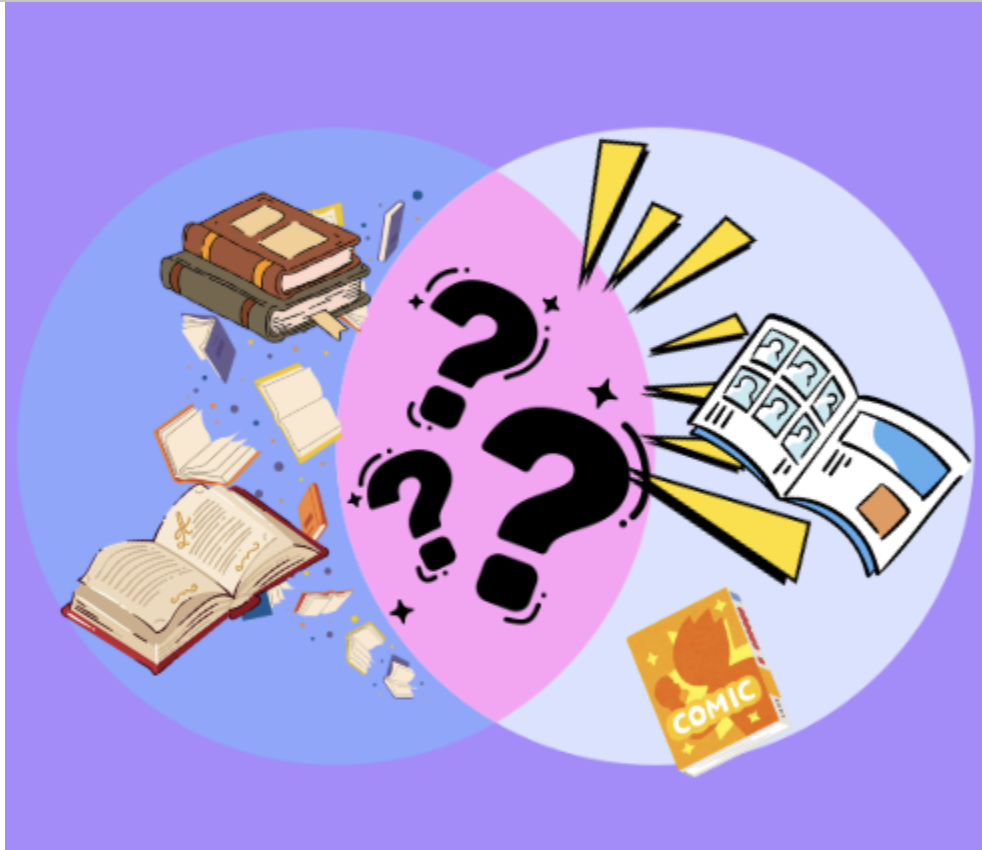
Everyone has been influenced by literature, whether non-fiction, romance, or science fiction. Comics, including superhero stories, Manga, and graphic novels, capture young readers’ interest. Yet, an ongoing debate remains: Are comics simply entertainment, or can they be educational and considered literature?
The Liberal Arts of Oregon State University defines Literature as something that differs from the mass of writing by offering more and different kinds of experiences than the ordinary non-literary text.
In the article “Are Comic Books Literature?” by Luis Zavala on The Daily Aztec, it says, “Comics aren’t just a way to bring back new readers to classics- characters new to our imagination can teach us life lessons.
Superheroes that are iconic to the medium are memorable for a reason. Morals, values, and art that showcase these are seen in every comic possible. You will be left in awe as you are reading and seeing the art that stands out.”
The idea of comic books as literature is controversial. People define literature differently, often by its depth or sophistication. Dawn Schafer, an English teacher at Horizon High School, described it as “something sophisticated [with] more depth.” Literature should have depth; many agree it must be profound, with narrative or character complexity. This sets a standard that some argue comics do not meet.
Most people against comic books being literature point to companies like Marvel and DC and how their comic books are singular one-off stories depicting very stereotypical, black and white hero and villain archetypes, which doesn’t exactly reach the standard of complexity most call for when calling something literature.
However, people who point out that comic books are literature point out that there are many comics that reach this level of complexity. If you consider graphic novels a type of comic. That opens a whole new world of possibilities for this conversation. Many graphic novels cover emotionally complex topics, like Sweet Tooth, which covers a heavy theme of what is moral during the end of the world. Many would say this is a complex topic to grapple with in comic form.
Graphic novels can also cover heavy historical topics. For example, there are several graphic novels that cover the Holocaust, like Maus, or Persepolis, which is an autobiography of a girl growing up in Iran during the Islamic Revolution. Many would claim that these stories should be considered literature.
Overall, comic books being literature can be controversial. But something most people can agree on is that graphic novels are closer to being deemed as literature, mostly depending on their genre.